How to Choose Stand Up Food Pouches?

Choosing stand up food pouches is not simply a matter of selecting attractive artwork. The pouch must protect food, support efficient filling, and survive transport. Smithers’ 2024 flexible packaging outlook identifies food as a leading end-use sector. It also emphasizes barrier performance, material efficiency, and changing sustainability expectations. These factors directly affect pouch selection.

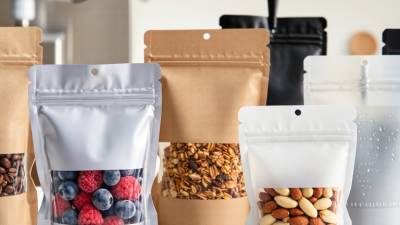
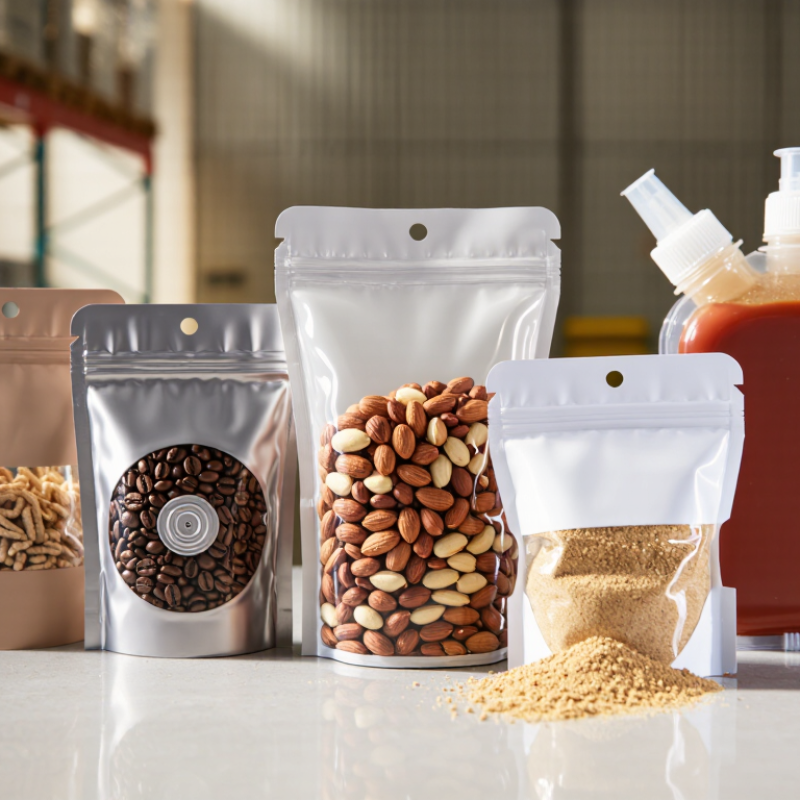
Start with the product. Dry snacks may need protection from moisture and oxygen. Coffee, nuts, and powdered foods often require stronger oxygen barriers. Sauces and wet foods may need heat-sealable structures and reliable leak resistance. A zipper helps repeated use. A spout improves controlled pouring. Neither feature is automatically necessary. It depends on the consumer’s routine.

The Flexible Packaging Association’s 2024 industry report places the U.S. flexible packaging market near 40 billion dollars in annual sales. That scale shows the format’s commercial importance, but market growth does not guarantee a suitable pouch. Test the filled package, not only the empty sample. Check seal strength, drop resistance, shelf-life performance, and filling-line speed. Small details matter. A weak corner can ruin a strong design.

Material decisions require more care. Recyclability claims may depend on local collection systems and approved structures. A lightweight pouch can reduce material use, yet multilayer barriers may complicate recovery. Industry guidance from CEFLEX and the Sustainable Packaging Coalition encourages evidence-based design rather than vague environmental language. There is no perfect pouch for every food. The better choice balances protection, usability, cost, and verified end-of-life options. Review the decision again before committing to high-volume production.
How to Choose Stand Up Food Pouches?

Identify the Product, Filling, and Storage Requirements

How to Choose Stand Up Food Pouches?

Identify the Product, Filling, and Storage Requirements

Choosing a stand up food pouch starts with the product, not the pouch shape. Dry snacks, sauces, coffee, and frozen foods need different barrier levels. A roasted snack may require oxygen and moisture protection. A sauce may need stronger seals and resistance to oil migration. According to Smithers’ The Future of Flexible Packaging to 2028, barrier performance and downgauging remain major development priorities in flexible packaging.

Filling conditions matter just as much. Hot filling can weaken unsuitable films or distort the pouch base. High-speed filling also demands stable dimensions and reliable seal areas. PMMI reports that packaging machinery investment increasingly focuses on automation, flexibility, and reduced material waste. Therefore, test the pouch on the actual filling line, not only in a laboratory. Storage is equally important. Check temperature, humidity, stacking pressure, transport vibration, and expected shelf life. The wrong assumption can become expensive.

Tips: Request migration and seal-strength data from the converter. Test filled samples after heat exposure, freezing, and compression. Inspect spouts, zippers, and tear notches during use. Use real distribution trials when possible. No checklist is perfect. A pouch that looks strong may still fail at its weakest seal. Grand View Research identifies growing demand for convenient flexible packaging, but convenience should never replace product-specific testing. Start with the filling process, then confirm the barrier structure and storage performance.

Choose the Right Pouch Material and Barrier Properties

How to Choose Stand Up Food Pouches?

Choose the Right Pouch Material and Barrier Properties

Choosing a stand up food pouch starts with the food inside, not the artwork outside. Dry snacks usually need moisture protection, while sauces require strong seals and puncture resistance. A basic polyethylene layer supports heat sealing and flexibility. Polyester can improve stiffness and surface print quality. Nylon helps resist impact during transport. It may not suit every product.

Barrier performance deserves careful attention. Oxygen can damage flavor, color, and nutrients. Moisture can soften crackers or encourage quality loss. Light may affect oils, spices, and sensitive ingredients. For these risks, suppliers may use EVOH, metallized film, or aluminum foil. Aluminum offers strong protection, but it can reduce microwave suitability and increase material complexity. No single structure solves every problem.

Think about the full journey. A pouch filled with hot soup faces different stress than one holding roasted seeds. Check seal strength, drop resistance, zipper performance, and storage temperature. Ask for oxygen and water vapor transmission data, not only general barrier claims. Shelf-life testing should use the actual food and filling process. Lab results help, but real distribution can be rougher.

A small weakness matters.

I have seen attractive structures fail because the zipper area was overlooked. That detail can ruin an otherwise suitable pouch. Review the package after filling, stacking, shipping, and opening. The best material choice is practical, testable, and matched to the product’s real risks.

How to Choose Stand Up Food Pouches?

Choose the pouch material according to the product’s sensitivity to oxygen and moisture. Lower OTR and WVTR values indicate stronger barrier protection.

Representative typical barrier values at approximately 23°C and 50% relative humidity. Actual performance varies with film thickness, seal quality, construction, and test method.

Compare Size, Shape, Closure, and Standing Stability

How to Choose Stand Up Food Pouches?

Size should follow the serving, filling equipment, and storage scene. A 250-gram pouch may suit snacks, but dense powders need stronger gussets. Leave enough headspace for sealing. Overfilling can wrinkle the seal and weaken standing stability.

According to the Flexible Packaging Association’s 2024 State of Flexible Packaging Industry report, U.S. flexible packaging sales reached approximately 40 billion dollars in 2023. This scale reflects strong demand for practical, lightweight formats. Still, the largest pouch is rarely the best choice.

Shape changes both shelf impact and performance. A wide base improves balance, especially for liquid or granular food. A narrow body saves shelf width but may tip after opening. Test the pouch with real product, not empty samples.

Closure choice also matters. Zippers support repeated use, while tear notches improve quick access. PMMI packaging trend research identifies convenience and resealability as continuing design priorities.

In my experience, a zipper can feel useful but fail when powder enters the track. That detail is easy to miss.

Tips:

Check the filled pouch on a moving shelf. Open it with wet or oily hands. Measure seal strength after transport testing. Compare three sizes before approving artwork.

A pouch that stands beautifully in a meeting may lean in a customer’s kitchen. That is an imperfect result, but it reveals the real design problem.

Check Safety, Sustainability, and Printing Requirements

Choosing stand up food pouches requires more than comparing sizes and prices. Safety should guide every decision. Confirm that the pouch is designed for direct food contact and matches your product’s acidity, oil content, moisture, and filling temperature. Ask for migration test results, material specifications, seal-strength data, and production traceability. A pouch for dry snacks may fail with hot soup or oily sauces. Small details matter.

Sustainability needs careful checking, too. Consider lightweight structures, recycled content, and mono-material options where suitable. However, “recyclable” claims depend on local collection and sorting systems. Request clear evidence instead of relying on attractive wording. A thinner pouch may reduce material use, but weak seals can increase food waste. That trade-off deserves honest review. No pouch is perfect.

Tips: Test samples with your actual food, not water alone. Store filled pouches under realistic conditions, including heat, cold, stacking, and transport. For printing, use food-safe inks and confirm whether reverse printing protects the artwork. Check barcode readability, small text, color consistency, and seal-area clearance. Approve a physical proof before mass production. A beautiful design can still fail on a wrinkled pouch. Recheck every revision, because one unnoticed color or text change may affect the entire run.

How to Choose Stand Up Food Pouches? - Check Safety, Sustainability, and Printing Requirements

Evaluation Area Key Requirement Recommended Checkpoint Relevant Standard or Reference Selection Guidance
Food-contact safety Materials must be suitable for direct contact with the packaged food. Request a current declaration of compliance or food-contact compliance statement for every layer, adhesive, ink, and coating. U.S. FDA 21 CFR requirements; EU Regulation (EC) No. 1935/2004 and, where applicable, Regulation (EU) No. 10/2011. Confirm that the compliance documentation covers the intended food type, temperature, storage time, and processing conditions.
Food compatibility The pouch structure should resist interaction with acidic, oily, salty, alcoholic, or high-moisture foods. Review migration testing and conduct product-specific compatibility testing, especially for oils, sauces, and high-fat foods. Applicable food-contact regulations and national migration limits. Do not select a pouch solely by appearance; the same film structure may perform differently with different food formulas.
Barrier protection The package must control oxygen, moisture, light, and aroma transmission according to the product’s sensitivity. Compare oxygen transmission rate, water vapor transmission rate, and light protection under the intended test conditions. ASTM and ISO test methods selected by the laboratory and product application. Use higher-barrier structures for oxygen-sensitive, moisture-sensitive, light-sensitive, or aroma-sensitive products.
Seal integrity Top, side, bottom, and zipper seals must remain closed during filling, transport, storage, and use. Check seal strength, leak resistance, burst resistance, and seal performance when contaminated with product. ASTM F88 for seal strength; ASTM F1929 or ASTM F2096 for applicable package leak testing. Validate the pouch on the actual filling line because sealing temperature, pressure, dwell time, and product contamination affect performance.
Closure and reusability Zippers, spouts, and tear notches should provide convenient opening and reliable resealing where required. Test opening force, reseal performance, leakage after repeated use, and compatibility between the closure and pouch film. Internal performance specifications supported by package-use testing. Choose a zipper for dry or semi-dry products and a spout when controlled pouring is important; verify child-safety needs where applicable.
Material structure The film combination should balance barrier performance, stiffness, sealability, and end-of-life options. Identify each layer and its function, including the sealant layer, barrier layer, adhesive, ink, and coating. Supplier technical data and applicable food-contact requirements. Avoid unnecessary layers or material combinations when the required shelf life can be achieved with a simpler structure.
Recyclability The pouch should be compatible with the collection and recycling system available in the target market. Confirm whether the structure is accepted by local flexible-plastic recycling programs and whether it meets their design criteria. Local recycling guidance, APR design guidance where relevant, and applicable extended producer responsibility rules. Do not claim “recyclable” based only on the presence of a recyclable polymer; collection, sorting, and reprocessing infrastructure must also exist.
Reduced material use The pouch should use the minimum material needed to protect the product and withstand distribution. Compare pouch weight, product-to-package ratio, empty-package volume, and transport efficiency against suitable alternatives. Life-cycle assessment principles and internal packaging efficiency measurements. A lightweight pouch can reduce material and transport impacts, but not if it causes leakage, food waste, or premature product loss.
Compostability claims Compostable packaging must meet recognized requirements and be suitable for the intended composting environment. Request certification and confirm whether the claim applies to industrial composting or home composting. EN 13432, ASTM D6400, or other applicable regional requirements. Use precise disposal language; industrially compostable packaging may not break down in home compost or ordinary landfill conditions.
Print durability Printed graphics must remain legible after filling, handling, storage, and exposure to expected moisture or abrasion. Test rub resistance, adhesion, solvent resistance, moisture resistance, and color stability on the finished pouch. Ink supplier specifications and applicable print-quality test methods. Select surface or reverse printing according to the film structure, handling conditions, and required visual quality.
Ink and adhesive safety Printing inks, coatings, and adhesives must be suitable for the selected food-contact structure and production process. Review low-migration documentation, curing requirements, residual solvent controls, and set-off risk during roll storage. Applicable food-contact legislation and supplier technical documentation. For direct or indirect food-contact applications, verify that the ink and adhesive system matches the production method and barrier design.
Artwork and information Mandatory information must remain readable and accurately reproduced on the pouch. Check barcode readability, nutrition information, ingredients, allergens, net quantity, lot coding area, and disposal instructions. Food-labeling regulations in the destination market and GS1 barcode specifications where applicable. Reserve clear areas for variable data, ensure sufficient contrast, and complete a printed proof before mass production.
Production compatibility The pouch design must run reliably on the filling, forming, sealing, and coding equipment. Verify pouch dimensions, opening stability, filling speed, sealing window, registration tolerance, and coding performance. Equipment specifications and validated packaging-line procedures. Conduct a production trial with the final pouch material, artwork, closure, product, and filling conditions.
Quality assurance The supplier should provide consistent pouch quality and traceable production controls. Review certificates of analysis, incoming-material controls, batch traceability, inspection records, and retained samples. Supplier quality-management system and agreed technical specification. Approve a signed specification covering dimensions, material structure, artwork, tolerances, seal performance, and acceptance criteria.

Note: Regulatory requirements, recycling availability, labeling rules, and packaging claims vary by product and destination market. Final approval should be based on product-specific testing and local legal review.

Evaluate Suppliers, Costs, and Quality Standards

How to Choose Stand Up Food Pouches?

Evaluate Suppliers, Costs, and Quality Standards

A reliable supplier should provide clear material specifications, food-contact documents, and recent test reports. Ask whether the pouch uses suitable barrier layers for moisture, oxygen, light, or aroma protection. These needs depend on the food inside. Dry snacks, sauces, and oily products require different structures.

Request production samples from the same material and process used for bulk orders. Test the zipper, seals, corners, and standing base. Fill each pouch with the intended product, then check leaks after storage and gentle drop tests. In supplier audits, I also review batch records, inspection methods, and traceability procedures. Small details matter.

Compare more than the unit price. Include printing plates, setup fees, minimum order quantities, freight, storage, and rejected pieces. A cheaper pouch may create higher costs if seals fail on a filling line. I once treated a low unit price as a clear advantage. It was not. The supplier had limited quality data, and the first samples varied in thickness.

Ask for a written tolerance range. Confirm whether the supplier can repeat color, dimensions, and seal strength across batches. Independent laboratory testing can verify barrier performance and migration requirements. Suppliers should also explain corrective actions when results fall outside specifications. Honest answers are useful. Perfect promises are not. Leave room for another sample round before approving production.