China Best Stand Up Food Pouches Manufacturer?

China’s stand up food pouches market combines advanced converting equipment, competitive production costs, and extensive material choices. Yet “best” depends on more than a low quotation. Food brands must examine barrier performance, seal strength, printing accuracy, factory consistency, and documented food-contact controls.

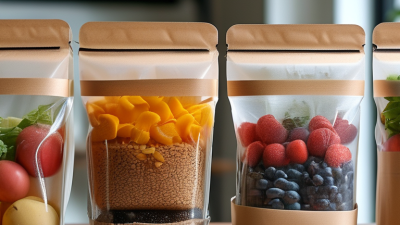
David Luttenberger, a packaging-industry analyst, describes packaging as “a silent salesperson.” That idea fits stand up food pouches closely. A pouch must protect food, but it must also communicate freshness on a crowded shelf. Its matte surface, resealable zipper, stable base, and clear product window can influence a buyer within seconds.

A reliable Chinese manufacturer should provide material specifications, migration documentation, sample testing, and traceable quality records. Ask how the supplier checks pinholes, uneven seals, zipper alignment, and pouch dimensions. Request production samples filled with the actual product. Powder, oil, moisture, and oxygen can behave differently inside the same package.

Experience matters here. A supplier may produce attractive samples, then struggle during long production runs. That weakness is easy to miss. Factory audits, pilot orders, and independent testing reduce the risk. Sustainability also requires careful judgment. Recyclable structures may offer advantages, but they can demand different sealing temperatures or provide less barrier protection.

The strongest candidate is not automatically the largest factory. It is the supplier that explains limitations clearly, responds with evidence, and improves after criticism. No manufacturer is perfect. That assumption deserves testing. This guide will examine how to compare China’s stand up food pouches manufacturers through practical, measurable criteria.
China Best Stand Up Food Pouches Manufacturer?

What Are Stand-Up Food Pouches and How Are They Used?

China Best Stand Up Food Pouches Manufacturer?

What Are Stand-Up Food Pouches and How Are They Used?

Stand-up food pouches are flexible bags with a bottom gusset that helps them remain upright. They usually combine several film layers for strength, barrier protection, and reliable sealing. Depending on the product, the structure may resist moisture, oxygen, light, or grease. This design uses less material than many rigid containers, while offering a broad printable surface.

They are used for snacks, coffee, dried fruit, sauces, pet food, and frozen products. A pouch may include a zipper, tear notch, spout, or handle. Zippers help consumers reseal dry foods after opening. Spouts support controlled pouring for sauces and liquid products. The package must match the product’s weight, temperature, oil content, and storage conditions.

Good structure matters. During production, manufacturers should check seal strength, pouch dimensions, leakage resistance, and zipper performance. Food-contact materials also need suitable documentation for the intended market. A practical sample test can reveal problems that drawings miss, such as weak corners or poor shelf stability. They stand upright.

The best pouch is not always the thinnest one. Excessively light material may crease, puncture, or lose sealing performance during transport. That detail is easy to miss. Careful testing, clear specifications, and honest communication help create packaging that performs consistently from filling to final use.

What Are Stand-Up Food Pouches and How Are They Used?

Stand-up food pouches are flexible packages designed to remain upright with a bottom gusset. The representative fill sizes below reflect commonly used retail pack formats for different food applications. Zippers support resealing, tear notches improve opening convenience, and spouts are often used for pourable products.

Why Choose a Chinese Stand-Up Food Pouch Manufacturer?

Why Choose a Chinese Stand-Up Food Pouch Manufacturer?

A Chinese stand-up food pouch manufacturer can offer practical advantages beyond competitive pricing. Many factories combine film production, printing, lamination, pouch forming, and quality inspection in one facility. This integrated process can reduce handoffs and improve production consistency. Buyers can also request custom sizes, resealable zippers, tear notches, windows, and barrier structures for different foods. From my experience, direct factory communication often makes sampling and design changes faster. However, “best” should never mean cheapest.

Reliable manufacturers should provide food-contact documentation, migration test reports, production records, and material traceability. Ask about seal-strength testing, leakage checks, color control, and inspection frequency. A professional supplier should explain how its pouch protects against moisture, oxygen, light, or grease. It should also confirm realistic minimum order quantities and lead times. Some factories look impressive online, but their sample quality may not match mass production. That gap deserves careful attention.

Tips: Request several pre-production samples. Test them with your actual food product, filling temperature, storage conditions, and transport method. Check the zipper repeatedly. Measure seal performance after stacking and vibration. Keep written specifications, approved artwork, and inspection standards. Communication can still be imperfect, especially across languages and time zones. Use simple documents and confirm every change in writing. One overlooked detail can affect an entire shipment.

How to Evaluate Materials, Safety, and Packaging Quality

China Best Stand Up Food Pouches Manufacturer?

A reliable stand-up pouch begins with the correct material structure, not a glossy finish. For dry foods, PE-based films may provide useful sealability and recyclability potential. Oxygen-sensitive products may need PET, nylon, or aluminum foil layers. Ask for the full structure and thickness. Do not accept “food grade” as sufficient evidence. Request food-contact declarations, migration testing, batch traceability, and current certificates from recognized laboratories. FSSC 22000, BRCGS, or ISO 22000 systems can support confidence, but certificates still require verification.

Packaging quality needs measurable testing. Check seal strength, leak resistance, drop performance, zipper function, and pouch dimensions. Test both empty and filled samples. A pouch that survives a factory inspection may fail after vibration during shipping. Measure oxygen and water-vapor transmission when freshness matters. The Flexible Packaging Association’s 2024 State of Flexible Packaging Industry Report valued U.S. flexible packaging sales at 42.9 billion dollars in 2023. That scale increases the importance of consistent quality control, not merely low purchasing prices.

A practical mistake is judging quality by appearance alone. I have seen attractive pouches with uneven seals and weak corners. Ask the manufacturer for recent inspection records, retained samples, and corrective-action reports. Review printing ink adhesion and odor after production. Confirm whether recycled content affects food-contact suitability. Specifications can look perfect on paper. Real samples may still reveal curling, pinholes, or poor filling performance.

Which Customization Options Do Chinese Manufacturers Provide?

China Best Stand Up Food Pouches Manufacturer?

Chinese manufacturers offer extensive customization for stand-up food pouches. Options include pouch size, gusset depth, zipper style, spouts, handles, windows, and rounded corners. Buyers can also select matte, glossy, soft-touch, or metallic finishes. Digital printing suits small test runs, while gravure printing supports larger volumes and consistent color.

Material structure matters more than decoration. Manufacturers can combine polyethylene, polypropylene, polyester, aluminum foil, or barrier films. The right structure protects dry food, sauces, coffee, or frozen products from moisture, oxygen, and light. Smithers’ The Future of Flexible Packaging to 2028 reports that the global flexible packaging market exceeds US$300 billion. Its analysis also highlights lightweighting and barrier performance as key development areas.

Ask for oxygen transmission, moisture transmission, seal strength, and drop-test results. A beautiful sample can still fail during transport. I would not approve production from appearance alone.

Tips: Request a printed mock-up, an unfilled sample, and a filled heat-sealed sample. Confirm food-contact documents, production tolerances, minimum order quantity, and lead time. Test the zipper with wet hands. This small detail is often ignored. Some customization choices raise costs sharply, especially complex shapes, foil layers, and special finishes. A reliable manufacturer should explain those trade-offs clearly, not promise everything cheaply.

How to Select the Best Stand-Up Food Pouch Supplier in China?

Selecting the best stand-up food pouch supplier in China requires more than comparing prices. Review the factory’s experience with food packaging, material structures, and pouch formats. Ask for production photos, quality records, and recent sample batches. A reliable supplier should explain whether the pouch uses suitable food-contact films and how each layer protects freshness.

Request samples before placing a large order. Test the zipper, bottom gusset, seal strength, and resistance to leaks. Fill a pouch with your actual product, then check it after transportation and storage. A sample may look excellent but fail when exposed to oil, moisture, pressure, or temperature changes. That happened to us once.

Tips: Ask for third-party test reports, factory audit support, traceable raw materials, and clear production timelines. Confirm minimum order quantities, printing tolerances, mold fees, and replacement terms in writing. Check how quickly the supplier answers technical questions. Slow replies often create larger problems during mass production.

Choose a supplier that communicates limitations honestly. They should discuss barrier performance, recycling claims, and printing restrictions without making vague promises. Verify compliance documents for your target market, because requirements differ between countries. Also inspect quality controls, including seal testing, color checks, and finished-pouch sampling. The cheapest quote is rarely the safest choice. A dependable partner delivers consistent pouches, practical advice, and evidence behind every important claim.

China Best Stand Up Food Pouches Manufacturer? - How to Select the Best Stand-Up Food Pouch Supplier in China?
Selection Dimension What to Evaluate Recommended Technical or Commercial Benchmark Documents or Evidence to Request Evaluation Priority
Food-Contact Compliance Whether the pouch structure and inks are suitable for the intended food category and market. Materials should comply with the applicable food-contact requirements, such as FDA food-contact regulations for the United States or Regulation (EC) No. 1935/2004 and Regulation (EU) No. 10/2011 for the European Union. Declaration of compliance, migration-test report, material specification sheet, and applicable regulatory statement. Critical
Food-Safety Management The supplier’s control of hygiene, traceability, contamination risks, and production records. Prefer a documented food-safety management system certified to a recognized scheme, such as ISO 22000 or BRCGS Packaging Materials, with a valid certificate and defined scope. Current certificate, audit summary, corrective-action records, hygiene procedures, and traceability test results. Critical
Barrier Performance Protection against oxygen, moisture, light, and aroma loss according to the product’s sensitivity. Set targets by product rather than using one universal value. As a practical starting point, oxygen-sensitive foods may require an OTR below 1.0 cm³/m²/day, while moisture-sensitive products may require a WVTR below 1.0 g/m²/day. Final limits should be confirmed by shelf-life testing. Third-party or laboratory OTR and WVTR reports, test conditions, film structure, and shelf-life validation data. Critical
Film Structure Suitability of the laminate or mono-material structure for the product, filling process, and disposal requirements. Common structures include PET/PE for general dry foods, PET/MPET/PE for high light and oxygen protection, and PET/AL/PE for very high barrier applications. The structure should be matched to temperature, fat content, acidity, and storage conditions. Layer-by-layer material specification, thickness tolerance, adhesive information, recyclability statement, and intended-use limitations. High
Seal Strength and Integrity Resistance of the top, bottom, side, and zipper seals to leakage during filling, transport, and storage. Require a defined minimum seal-strength specification and a validated sealing window. ASTM F88/F88M can be used for seal-strength testing, while ASTM D3078 is commonly used for gross-leak testing of flexible packaging. Seal-strength results, leak-test records, seal-temperature range, dwell time, pressure settings, and production inspection plan. Critical
Pouch Format and Function Whether the pouch design supports product loading, shelf display, consumer use, and transportation. Evaluate bottom-gusset stability, filling-mouth design, tear notch, rounded corners, zipper performance, spout compatibility, and optional handles. The pouch should stand securely without excessive deformation. Dimension drawing, technical sample, filled-pouch trial, opening-force data, zipper-cycle test, and drop-test results. High
Printing Quality Color consistency, registration accuracy, barcode readability, and resistance to scuffing or rubbing. Use an agreed color standard and documented tolerance. Confirm that printed surfaces, varnishes, and adhesives are suitable for food packaging and do not compromise seal quality. Color proof, press approval procedure, barcode-verification report, rub-resistance test, and retained production sample. High
Dimensional Control Consistency of pouch width, height, gusset depth, film thickness, and seal position. Supplier should provide approved tolerances for every critical dimension and maintain inspection records for each production batch. Technical drawing, inspection report, calibration records, and sample measurements from multiple batches. High
Minimum Order Quantity Whether the order quantity is commercially suitable for testing, launch, and regular production. Compare minimum order quantities for digital printing, gravure printing, stock structures, custom sizes, and special accessories. The lowest quoted MOQ is not always the lowest total cost. Formal quotation showing MOQ, cylinder or plate charges, setup fees, sampling costs, and price breaks by volume. Medium
Lead Time and Capacity The supplier’s ability to meet the required launch date and maintain continuity during peak demand. Request separate lead times for artwork approval, cylinder preparation, sampling, mass production, and shipping. Capacity should be supported by production planning rather than a verbal promise. Written production schedule, capacity statement, monthly output range, contingency plan, and historical on-time delivery data. High
Quality-Control Process How the supplier prevents defects and handles nonconforming pouches. A documented process should cover incoming materials, printing, lamination, curing, slitting, pouch making, final inspection, sampling frequency, and lot release. Quality-control plan, defect classification, certificate of analysis, inspection checklist, and sample retention procedure. Critical
Sample-to-Mass-Production Consistency Whether the approved sample accurately represents regular production. Approve a sealed and signed reference sample. The supplier should use the same material structure, printing process, sealing method, and quality criteria for mass production. Golden sample, pre-production sample, production sample, comparison record, and change-control procedure. Critical
Packaging and Shipping Protection Protection against moisture, dust, compression, puncture, and deformation during export transportation. Finished pouches should be packed in clean protective bags and strong outer cartons or pallets. Carton markings should include product code, lot number, quantity, and production date. Export packing specification, carton dimensions, pallet plan, loading photos, and transportation test or drop-test records. Medium
Traceability and Change Control Ability to trace materials and production lots and to notify customers before significant changes. Each shipment should be linked to raw-material lots, production dates, machine records, inspection results, and retained samples. Material or process changes should require prior approval. Lot-traceability example, batch coding method, change-notification policy, complaint procedure, and recall process. Critical
Total Cost of Ownership The complete cost rather than only the unit price. Compare pouch price, tooling, testing, sampling, freight, import charges, packaging waste, filling-line efficiency, leakage risk, and expected replacement costs. Itemized quotation, freight assumptions, tooling amortization, payment terms, Incoterms, and warranty or claim policy. High
Reference values are general purchasing benchmarks for supplier comparison. Final material structures, barrier targets, seal specifications, and compliance requirements should be confirmed through product-specific testing and the regulations of the destination market.