How to Choose Kraft Stand Up Pouches for Global Buyers?
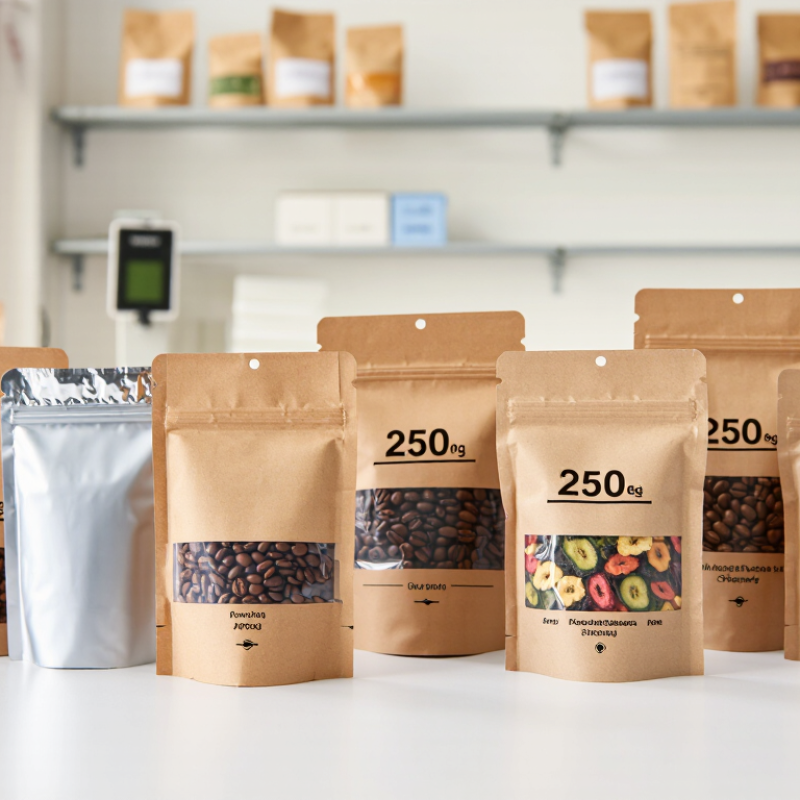
Choosing kraft stand up pouches for global markets involves more than selecting a brown, natural-looking package. Buyers must examine product protection, material structure, supplier consistency, and regional requirements. A pouch holding 250 grams of roasted coffee faces oxygen and aroma challenges. A pouch holding dried fruit needs strong moisture resistance. Different products require different barriers.
Packaging educator Walter Soroka described packaging as “the science, art, and technology of enclosing and protecting products.” This idea remains practical today. Kraft paper may create a warm shelf appearance, but it usually needs PE, CPP, PET, or aluminum layers underneath. The kraft layer supports branding. The inner layers help resist moisture, grease, oxygen, and heat during sealing. Looks matter. Performance matters more.
Reliable buyers should request technical datasheets, migration information, material declarations, and test results. They should also confirm zipper strength, seal integrity, tear-notch performance, and filling-machine compatibility. A pouch can look sustainable and still disappoint. I have seen attractive samples fail after humid storage or rough export handling. That is why sampling should include transport simulation, compression checks, and real product trials.
Global purchasing adds another layer. Confirm dimensions, gusset depth, printing tolerances, carton quantities, lead times, and customs documents before placing large orders. Ask whether the supplier can maintain color consistency between batches. Check whether stated recyclable or compostable claims match the actual structure and accepted local systems. “Eco-friendly” is not a complete specification.
This guide explains how to compare kraft stand up pouches with greater confidence. It focuses on practical evidence, not attractive promises. Mistakes still happen, especially when buyers prioritize price too early. A careful evaluation protects the product, the brand, and the customer’s trust.
Understanding Kraft Stand Up Pouch Materials and Key Features
How to Choose Kraft Stand Up Pouches for Global Buyers?
Kraft stand up pouches combine a natural paper surface with protective inner layers. The kraft paper creates a warm, tactile appearance for retail shelves. However, it does not provide enough moisture or oxygen protection alone. Most practical structures use kraft paper with PE, CPP, or aluminum foil layers. Each material changes the pouch’s strength, barrier performance, and disposal options.
Start with the product’s sensitivity. Dry snacks may need moisture resistance, while roasted coffee often needs stronger oxygen and aroma protection. For light-sensitive contents, an aluminum foil layer can reduce exposure. A clear inner layer helps with heat sealing and product visibility. Check the pouch thickness, bottom gusset, zipper quality, and seal width. These small details affect filling speed and transport durability.
Do not judge quality by appearance alone. I have seen attractive pouches fail after vibration testing because their seals were too narrow. Test samples under realistic humidity, temperature, stacking, and shipping conditions. Request material specifications, food-contact documents, and migration test reports from the supplier. Recyclability also requires careful review; mixed-material pouches may not fit every local recycling system. A paper-like finish can be misleading. Ask whether the structure uses coatings or plastic layers, then confirm the accepted disposal route in each target market.
How to Choose Kraft Stand Up Pouches for Global Buyers?
Understanding Kraft Stand Up Pouch Materials and Key Features
| Selection Dimension | What It Means | Typical Options or Data | Key Buyer Considerations |
|---|---|---|---|
| Outer Kraft Paper | The paper layer provides the natural appearance, printable surface, and stiffness associated with kraft stand up pouches. | Common basis weights are approximately 40–100 g/m². Brown kraft paper offers a more natural appearance, while white kraft paper provides a brighter print background. | Confirm paper basis weight, surface smoothness, print compatibility, color consistency, and whether the paper is responsibly sourced or certified when required. |
| Inner Heat-Sealing Layer | The innermost layer forms the seal and contacts the packaged product. It strongly affects seal strength, leak resistance, and filling-line performance. | Common sealant materials include PE and CPP. Seal initiation temperatures vary by structure and are normally specified by the converter. | Request seal-strength data, hot-tack performance, sealing temperature range, and compatibility with the product and packing equipment. |
| Barrier Structure | Barrier layers protect contents from oxygen, moisture, light, aroma loss, or grease, depending on the product category. | Typical structures may include kraft paper combined with PE, PET, metallized film, or aluminum foil. Barrier performance depends on the complete laminate, not the kraft paper alone. | Select the barrier according to product sensitivity. Dry powders, roasted coffee, oily snacks, and oxygen-sensitive foods may require different structures. |
| Moisture and Oxygen Protection | Moisture and oxygen transmission influence shelf life, texture, flavor, oxidation, and clumping. | Ask for measured WVTR and OTR results. Values are commonly reported as g/m²/day for water vapor and cm³/m²/day for oxygen under specified test conditions. | Do not compare values without checking test temperature, relative humidity, film thickness, test method, and whether the data applies to the finished pouch. |
| Pouch Format and Capacity | Stand-up construction uses a bottom gusset to improve shelf stability and display visibility. | Common formats include flat-bottom or Doypack-style pouches. Practical fill weights vary with product density; typical retail sizes range from small sample packs to multi-kilogram formats. | Confirm finished dimensions, usable volume, filling tolerance, product bulk density, headspace, pallet efficiency, and retail shelf requirements. |
| Closure and Convenience Features | Closures and opening features improve resealability, portion control, usability, and product protection after opening. | Available features may include press-to-close zippers, tear notches, laser scoring, spouts, hang holes, rounded corners, and degassing valves for selected products. | Test opening force, zipper alignment, reclosure performance, child-safety requirements where applicable, and compatibility with automated filling and sealing. |
| Print and Surface Finish | The external surface supports branding, regulatory information, barcodes, product instructions, and handling marks. | Common finishes include matte, gloss, soft-touch, spot varnish, and uncoated kraft effects. Printing may use flexographic or rotogravure processes depending on artwork and volume. | Verify color targets, barcode readability, ink resistance, scuff resistance, print registration, minimum order quantity, and artwork approval procedures. |
| Food Contact and Regulatory Compliance | Packaging components must be suitable for the intended product, market, storage conditions, and contact application. | Documentation may include food-contact declarations, migration test reports, material specifications, heavy-metal statements, and facility quality records. | Identify destination-market requirements before production. Confirm compliance for every layer, adhesive, ink, coating, zipper, valve, and other component. |
| Recyclability and End-of-Life | Recyclability depends on the complete pouch structure, local collection systems, and applicable packaging rules—not simply on the presence of kraft paper. | Paper-plastic, metallized, and foil laminates may have limited recycling options in some regions. Mono-material PE or PP structures may be designed for improved recyclability where collection systems accept them. | Request the full material composition, recycled-content information, recyclability assessment, and disposal labeling guidance for each target market. |
| Quality and Performance Testing | Testing confirms whether the pouch can withstand filling, transport, stacking, handling, and storage. | Relevant tests may include seal strength, drop resistance, burst resistance, tensile strength, puncture resistance, leakage testing, zipper cycling, and dimensional inspection. | Define acceptance criteria before mass production and request samples from the actual production structure rather than relying only on material swatches. |
| Shipping and Storage Conditions | Temperature, humidity, altitude, transportation distance, and stacking conditions can affect seals, barriers, adhesives, and pouch appearance. | Typical evaluations may include ambient storage, elevated-temperature aging, humidity exposure, transport simulation, and carton compression testing. | Share the complete logistics profile, including sea or air freight, warehouse climate, expected shelf life, carton configuration, and maximum stacking height. |
Note: The figures and options above are typical industry guidance rather than universal specifications. Final material selection should be based on the product’s moisture, oxygen, light, grease, aroma, and mechanical protection requirements, together with destination-market regulations and end-of-life infrastructure.
Related Posts
-
What Are the Top Types of Kraft Stand Up Pouches?
-

Top 10 Kraft Packaging Suppliers in China for Global Buyers?
-

The Sweet Art of Candy Packaging: Innovative Designs That Captivate and Preserve
-

What is Box Packaging Design and Why is it Important?
-

Discover the Best Personalized Packaging Bags from China?
-

Top Benefits of Personalized Packaging Boxes for Your Business Growth