How to Choose Coffee Packaging for Global Buyers?

Choosing coffee packaging for global buyers is not a simple branding exercise. It is a product-protection decision shaped by roasting style, transport distance, climate, and customer expectations. A delicate light roast may need stronger oxygen and moisture barriers than a quickly consumed local blend. A shipment crossing humid seas faces different risks from one delivered across a dry inland region.

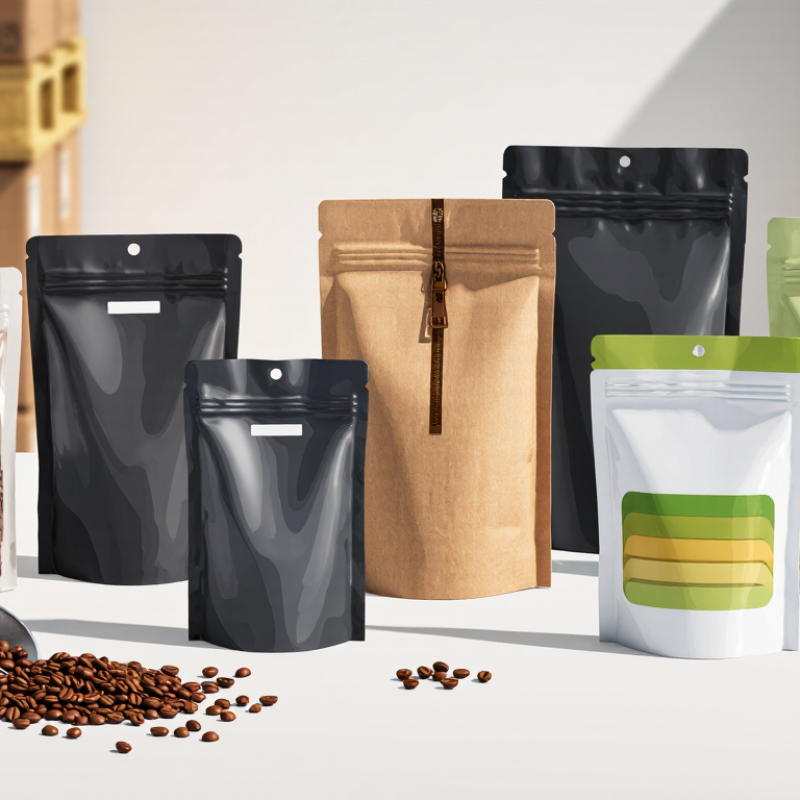
James Hoffmann, coffee author and educator, has said, “Coffee is a fruit, and it should be treated like one.” This principle matters when selecting coffee packaging. The pouch, valve, seal, and inner barrier should help preserve aroma after roasting. Ask practical questions. How long will the coffee travel? Will cartons sit in hot warehouses? Can the package stand upright without leaking or crushing? A one-way degassing valve may protect freshly roasted coffee, while a reliable zipper supports daily use.

Global buyers should also review material specifications, food-contact documentation, printing quality, and recycling guidance for each target market. Lightweight structures can reduce shipping weight, but thinner materials may weaken during handling. Compostable options sound attractive, yet their barrier performance and disposal conditions require honest testing. No package is perfect.

Real experience often reveals small failures: a weak side seal, a cloudy window, or a label that peels in condensation. These details affect trust. Request migration data, seal-strength results, shelf-life evidence, and samples from production. Then test them under realistic storage and transport conditions. Good coffee packaging protects flavor, communicates credibility, and admits where further improvement is still needed.
How to Choose Coffee Packaging for Global Buyers?

Define the Coffee Product, Market, and Packaging Requirements

Choosing coffee packaging for global buyers begins with defining the product clearly. Whole beans, ground coffee, and single-serve portions need different protection. Ground coffee loses aroma faster because more surface area meets oxygen. Light roasted beans may require stronger odor and oxygen barriers than darker roasts. Record the roast date, filling weight, degassing behavior, and expected shelf life before selecting a pouch or container.

The target market also changes the packaging decision. A humid coastal market may need better moisture resistance. Long ocean transport requires seals that tolerate pressure changes, handling, and temperature swings. Buyers should confirm label space, language needs, recycling claims, and food-contact documentation with local specialists. These details are easy to overlook. Small details matter. A package that performs well in a dry warehouse may fail after weeks in a hot container.

Packaging tests should match real conditions. Check seal strength, drop resistance, valve performance, and aroma retention. Send trial cartons through the planned shipping route, not only through a laboratory. In my experience, a beautiful pouch can still develop weak corners during pallet movement. Recyclable materials also deserve careful review; recyclability depends on local collection systems, not just a printed claim. I would compare two or three structures, measure actual waste, and ask buyers for handling feedback. One early sample may look perfect, but it rarely reveals every problem.

Compare Packaging Materials for Protection, Sustainability, and Cost

How to Choose Coffee Packaging for Global Buyers?

Coffee packaging must protect roasted beans from oxygen, moisture, light, and crushing during long shipments. Material choice affects shelf life, disposal options, and landed cost. High-barrier multilayer films usually provide strong aroma protection and low weight. However, their mixed layers can complicate recycling where collection systems are limited. Excellent protection.

Paper-based bags feel renewable, but paper alone rarely blocks oxygen well enough for fresh coffee. Adding a thin barrier layer improves performance, yet it may reduce straightforward recyclability. Buyers should request barrier data, seal strength results, and compliance documents from suppliers. Do not rely on appearance. Aluminum foil structures offer outstanding light and oxygen resistance. They can suit premium or extended-distribution products, but material use and recycling challenges may increase.

Recyclable mono-material films can simplify end-of-life handling in some markets. Still, they may need thicker gauges or special sealing conditions, raising cost. Test before scaling. Cost comparison should include freight, rejected packs, filling speed, and local disposal realities. A cheap pouch that loses aroma can damage buyer trust and create waste. Conversely, an advanced structure may exceed the product’s real protection needs. That is an easy mistake. Small pilot runs with humidity, compression, and transit testing often reveal the better balance. Results can be inconvenient, but they are more reliable than assumptions.

Select the Right Package Format, Size, and Barrier Performance

How to Choose Coffee Packaging for Global Buyers?

Coffee packaging should match the market, shipping route, and brewing habit. The USDA Foreign Agricultural Service’s Coffee: World Markets and Trade report projected global consumption above 170 million 60-kilogram bags in 2024. That scale creates varied buying needs. Choose 250-gram packs for trial sales and premium shelves. Use 500-gram packs for regular home users. Select one-kilogram bags for cafés and foodservice buyers. Smaller packs reduce opening-time exposure, but they increase packaging material and handling costs.

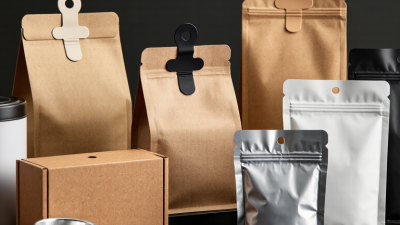
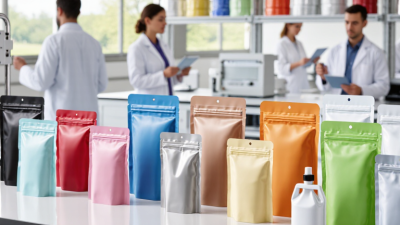
Format matters. Flat-bottom bags offer strong shelf presence and stacking efficiency. Pouches usually reduce shipping volume. Cans may protect better, but they often cost more and weigh more. For roasted coffee, oxygen and moisture barriers deserve careful testing. Ask suppliers for oxygen transmission rate and water vapor transmission rate data. ASTM D3985 and ASTM F1249 can support comparable laboratory testing. A one-way valve helps release carbon dioxide after roasting. Still, valve performance depends on roast level, fill temperature, and storage conditions. No package solves poor warehousing.

Tips: Start with the buyer’s forecast, not the supplier’s standard size. Request barrier results at the intended humidity and temperature. Test filled packs after ocean transit, not only in the laboratory. A nitrogen flush may improve freshness, but it adds equipment and process controls. I would avoid promising a fixed shelf life without real-time or accelerated validation. That assumption is easy to make, and often too confident.

How to Choose Coffee Packaging for Global Buyers? - Select the Right Package Format, Size, and Barrier Performance
Package format Common net sizes Typical construction Indicative barrier performance Best suited for Main advantages Key limitations
Quad-seal or flat-bottom pouch with one-way valve 250 g, 500 g, 1 kg, 2 kg High-barrier multilayer film, commonly including PET, metalized film or aluminum foil, PE sealant, and a degassing valve Target oxygen transmission rate (OTR): usually below 1.0 cm³/m²/day; foil-based structures can be below 0.1 cm³/m²/day when properly sealed Whole-bean specialty coffee, retail shelves, e-commerce, and export shipments Excellent branding area, good shelf stability, efficient pallet utilization, and strong stand-up appearance Requires accurate valve placement and reliable heat sealing; multilayer structures may be difficult to recycle
Side-gusset bag with tin tie or heat seal 500 g, 1 kg, 2 kg, 5 kg Paper outer layer with PE, metalized film, or aluminum-foil inner barrier; valve may be added for freshly roasted coffee Paper alone has limited moisture and oxygen protection; lined high-barrier versions can reach an OTR below 1.0 cm³/m²/day Traditional retail presentation, larger household packs, and markets that value a paper appearance Large filling capacity, familiar format, good printability, and relatively low conversion cost Less rigid and less stable on shelves; paper appearance does not automatically mean the pack is recyclable
High-barrier metal can 250 g, 500 g, 1 kg Tinplate or aluminum body with fitted lid, internal coating, and optional one-way degassing valve Effectively zero light transmission; gas and moisture protection is very high when the lid and seams remain intact Premium retail, gift packs, long-distance transport, and products requiring strong physical protection Excellent crush resistance, premium appearance, strong light barrier, and potential reusability Higher material and freight weight, greater shipping volume, and possible denting during handling
High-barrier glass jar 100 g, 200 g, 250 g, 500 g Glass container with airtight metal or polymer closure; optional internal seal or valve system Glass provides an excellent oxygen, moisture, and aroma barrier; protection depends mainly on closure integrity Premium ground coffee, gifting, local retail, and refill-oriented packaging programs Chemically inert, reusable, premium-looking, and highly resistant to aroma transfer Heavy, breakable, space-inefficient for export, and generally requires protective secondary packaging
Single-dose sachet or stick pack 7 g, 10 g, 12 g, 15 g Multilayer flexible film, often with aluminum foil or metalized barrier layer and heat-sealed edges High-barrier versions commonly target OTR below 0.5–1.0 cm³/m²/day and very low water-vapor transmission Hotels, offices, airlines, cafés, sampling, and portion-controlled instant or ground coffee Convenient dosing, low exposure after opening, compact logistics, and strong product consistency Higher packaging material per serving and limited recyclability for many laminate structures
Bulk liner bag inside corrugated case 2 kg, 5 kg, 10 kg, 20 kg Food-grade PE liner or high-barrier laminate inside a corrugated outer case; optional vacuum or nitrogen flushing Performance varies widely; high-barrier liners can achieve OTR below 1.0 cm³/m²/day, while standard PE provides lower oxygen protection Foodservice, industrial roasting, private-label filling, and regional distribution Efficient for bulk handling, good cube utilization, strong outer-case protection, and lower unit packaging cost Not ideal for consumer shelves; opening and resealing can reduce freshness after first use
Selection guide: Choose 250–500 g for retail trial and premium positioning, 1–2 kg for households and foodservice, and 5–20 kg for bulk distribution. For freshly roasted coffee, specify a one-way degassing valve and a high-barrier structure. Barrier figures are indicative targets; actual performance depends on material thickness, seal quality, closure design, filling atmosphere, storage temperature, humidity, and transport conditions.

Check Global Labeling, Safety, and Import Compliance

Choosing coffee packaging for global buyers requires more than attractive graphics. The label must match the destination market’s rules, language, and consumer expectations. Check the product name, net weight, country of origin, roast date, lot code, storage instructions, and importer details. Some markets require specific date formats or measurement units. A small label mistake can delay customs clearance.

Food-contact safety deserves equal attention. Ask the packaging supplier for material specifications, migration test results, and declarations of compliance. Confirm that inks, adhesives, liners, and barrier films suit roasted coffee and its storage conditions. The package should protect aroma, resist moisture, and maintain a reliable seal. Test cartons after stacking and shipping. A laboratory result does not replace real transport experience.

Import requirements vary by product type and destination. Green coffee may face different plant-health controls than roasted coffee. Verify tariff classification, customs documents, certificates, and local registration duties with the importer or a qualified compliance specialist. Avoid unsupported claims such as “eco-friendly” or “chemical-free.” Keep evidence for every environmental or quality statement. In practice, teams often check the front label carefully but overlook tiny text near the seam. That is a costly habit. Requirements can also change, so an old checklist may be incomplete. Leave space for corrective labels when appropriate, but do not treat them as a permanent solution.

Mandatory Allergen Groups for Coffee Products with Added Ingredients

Allergen requirements vary by destination. Use this comparison when selecting packaging, ingredient panels, translation space, and regulatory review procedures for flavored, filled, or blended coffee products.

The figures represent mandatory allergen groups or substances requiring declaration: United States: 9 major allergens; European Union: 14 allergens; Canada: 11 priority allergens; Japan: 8 specified allergens. Plain coffee beans may not trigger allergen labeling, but added ingredients and cross-contact risks must be assessed separately.

References: U.S. FDA | European Commission | Canadian Food Inspection Agency | Consumer Affairs Agency of Japan

Evaluate Suppliers, Testing Methods, and Total Packaging Costs

Global coffee buyers should evaluate packaging suppliers beyond the quoted unit price. Request factory audit records, food-contact declarations, traceability procedures, and recent batch certificates. A reliable supplier should explain resin sources, printing controls, seal settings, and corrective actions. Ask for production samples, not only digital artwork. Small details matter, especially a weak zipper or uneven gusset.

Testing should match the shipping route. Use ASTM D3985 for oxygen transmission and ASTM F1249 for water-vapor transmission. ASTM F88 can measure seal strength, while ASTM D4169 supports distribution testing. Test finished packs after filling, sealing, palletizing, and temperature cycling. Coffee can meet quality targets in the laboratory yet fail after a humid ocean voyage. That gap deserves attention. UNEP’s Food Waste Index Report 2024 estimated 1.05 billion tonnes of food waste in 2022, showing why product protection remains commercially important.

Calculate total packaging cost, not just the bag price. Include testing, cylinders, tooling, minimum order quantities, freight, pallet space, customs handling, inspection, and rejected units. A lighter pouch may reduce transport emissions, but poor stiffness can increase crushing losses. A high-barrier laminate may protect aroma better, yet complicate local recycling. Smithers’ packaging market analysis continues to identify barrier performance and recyclability as competing development priorities. I would also price a failure scenario: one damaged pallet, delayed replacement production, and customer claims. That estimate is imperfect, but often more realistic than a spreadsheet based on ideal output.